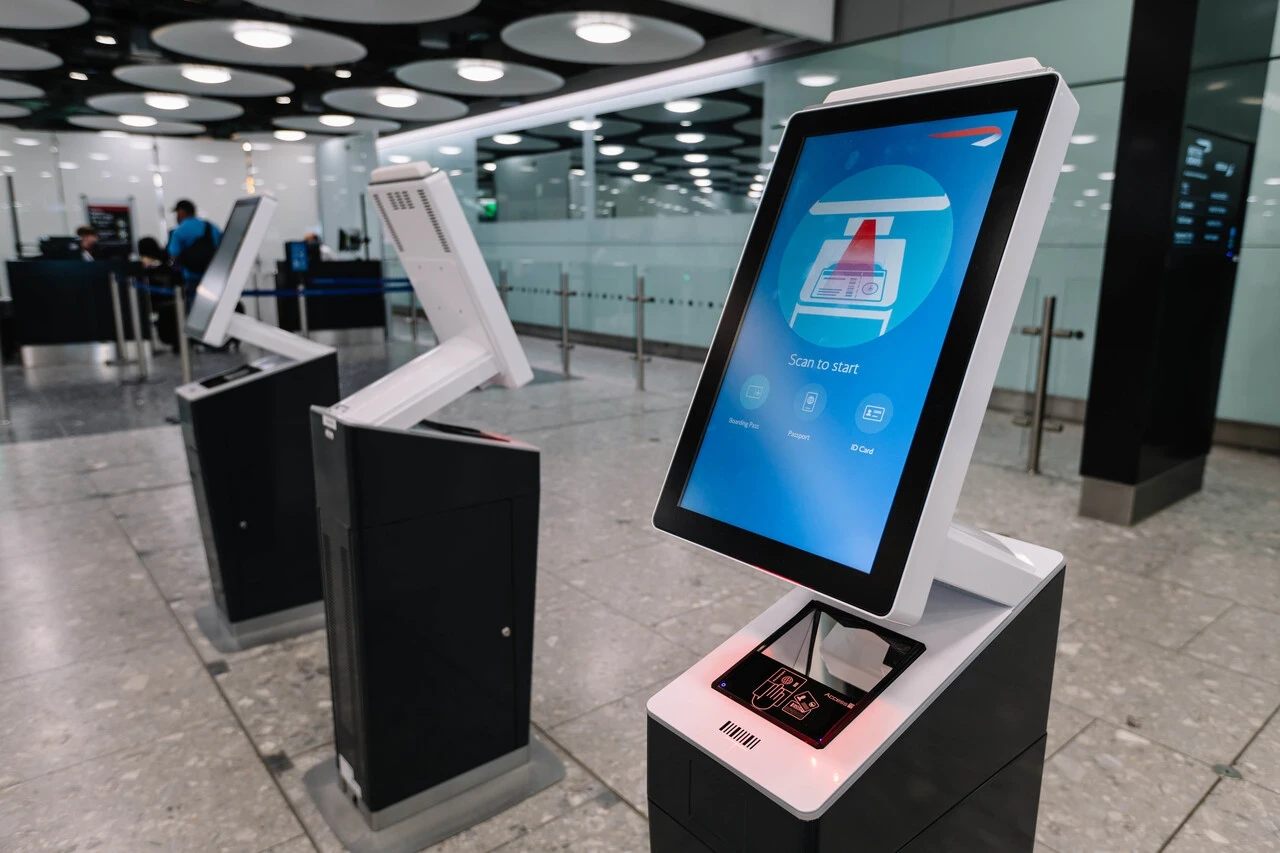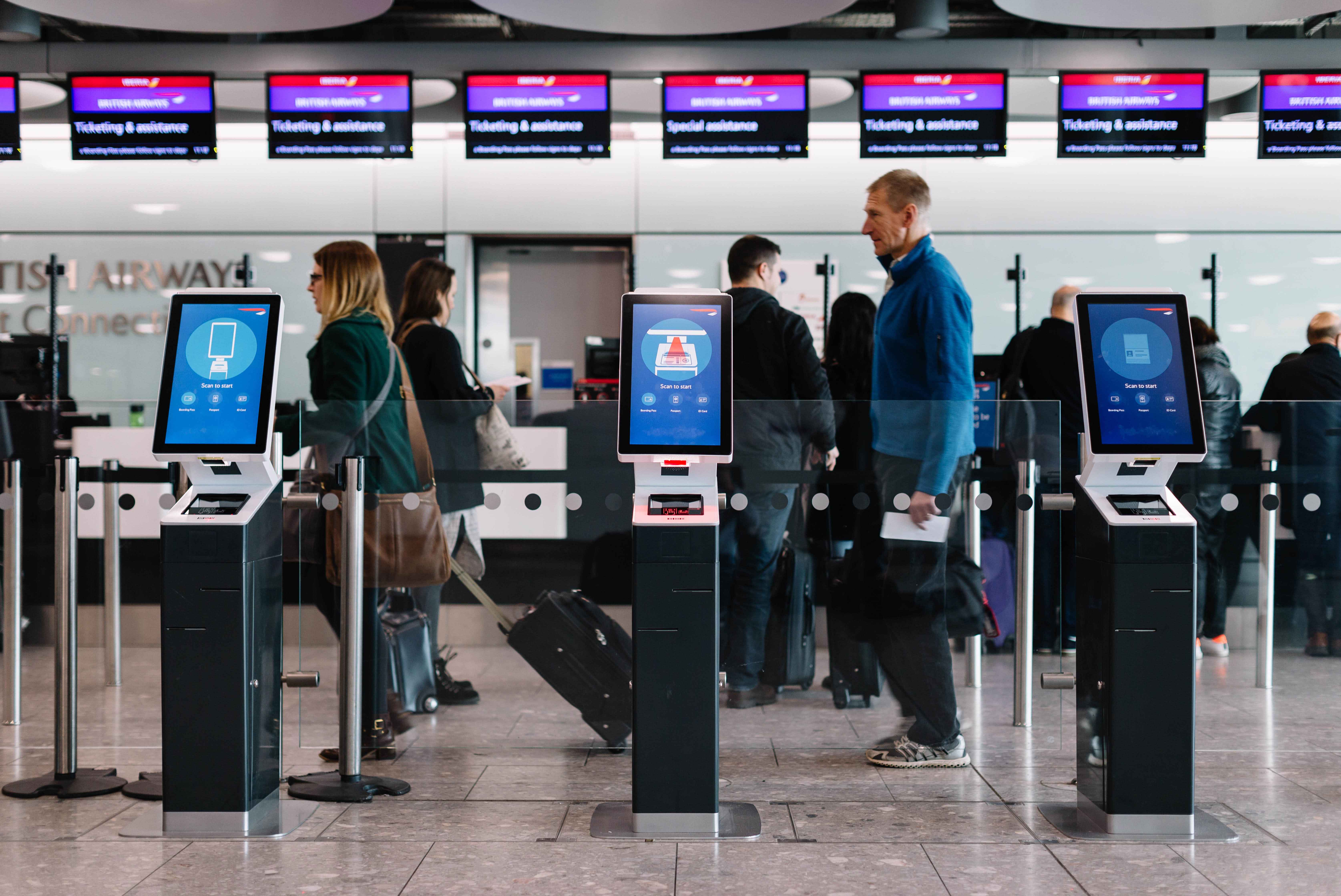
The Heathrow Terminal 5 Kiosk Solution was developed for British Airways to improve passenger flow and reduce queues at service desks.
The goal was to create a simple and intuitive experience that helped passengers — especially those connecting or travelling internationally — to quickly locate their departure gates, print boarding passes or baggage tags, and complete tasks without staff assistance.
The kiosks were deployed across the departures area and designed to perform reliably in high-traffic environments while maintaining British Airways’ premium visual identity.
Role:
UX/UI Designer
Team:
UX Lead, UX/UI Designer, Front-End Developer, BA Stakeholder Team
Collaboration:
Heathrow Operations and British Airways Digital Product teams
Focus:
User Research, Interaction Design, Wireframes, UI Design and Prototyping
As the UX/UI Designer, I was responsible for shaping both the experience design and the visual interface. My work spanned from mapping user flows and creating wireframes to designing the final on-screen layouts, ensuring every interaction was clear, responsive and brand-aligned.
At Heathrow Terminal 5, many British Airways passengers, especially those with connecting flights, struggled to find information or complete check-in tasks on their own. This caused bottlenecks at service desks, delays, and frustration for both passengers and staff.
The existing kiosks lacked visual clarity and used text-heavy instructions that didn’t support non-English speakers effectively. Our challenge was to design a faster, universal, and visually-led interface that anyone could use confidently, regardless of language or familiarity with the system.
The design process combined UX research, rapid prototyping and interface design. Working closely with the product and engineering teams, we tested multiple iterations directly in the terminal environment to ensure speed, clarity and accessibility under real-world conditions.
Research and Observation
Conducted on-site field studies to observe passenger behaviours and identify friction points.
Analysed the most common tasks performed at the kiosks (boarding pass reprint, gate lookup, baggage tag printing).
Journey Mapping and Flow Design
Created simplified user flows for key interactions such as “Scan to Start” and “Find Gate”.
Reduced unnecessary input steps and built in visual confirmations for every completed action.
User Flow Diagram
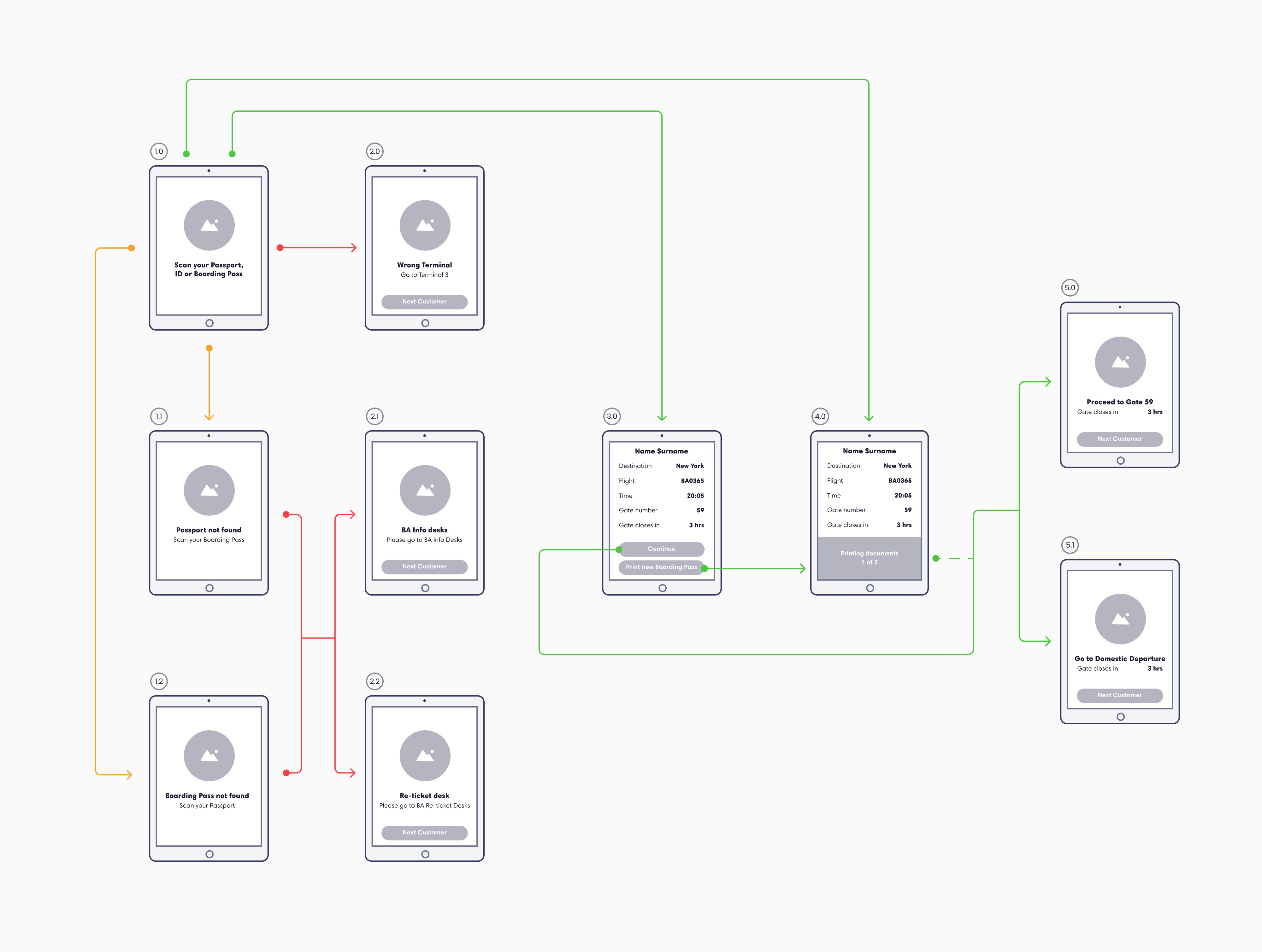
Mapping the simplified self-service journey.
Wireframes and Interaction Design
Produced mid-fidelity wireframes to validate task sequences and on-screen logic.
Focused on minimising cognitive load with large tap targets, clear hierarchy, and predictable navigation patterns.
UI Design and Prototyping
Designed a bold, icon-driven interface built around universal visual cues instead of text-heavy instructions.
Developed high-fidelity prototypes to test legibility, contrast and response time in varying light conditions.
Collaborated with engineers to ensure pixel-perfect translation of designs on kiosk hardware.
Kiosk Prototype Screens
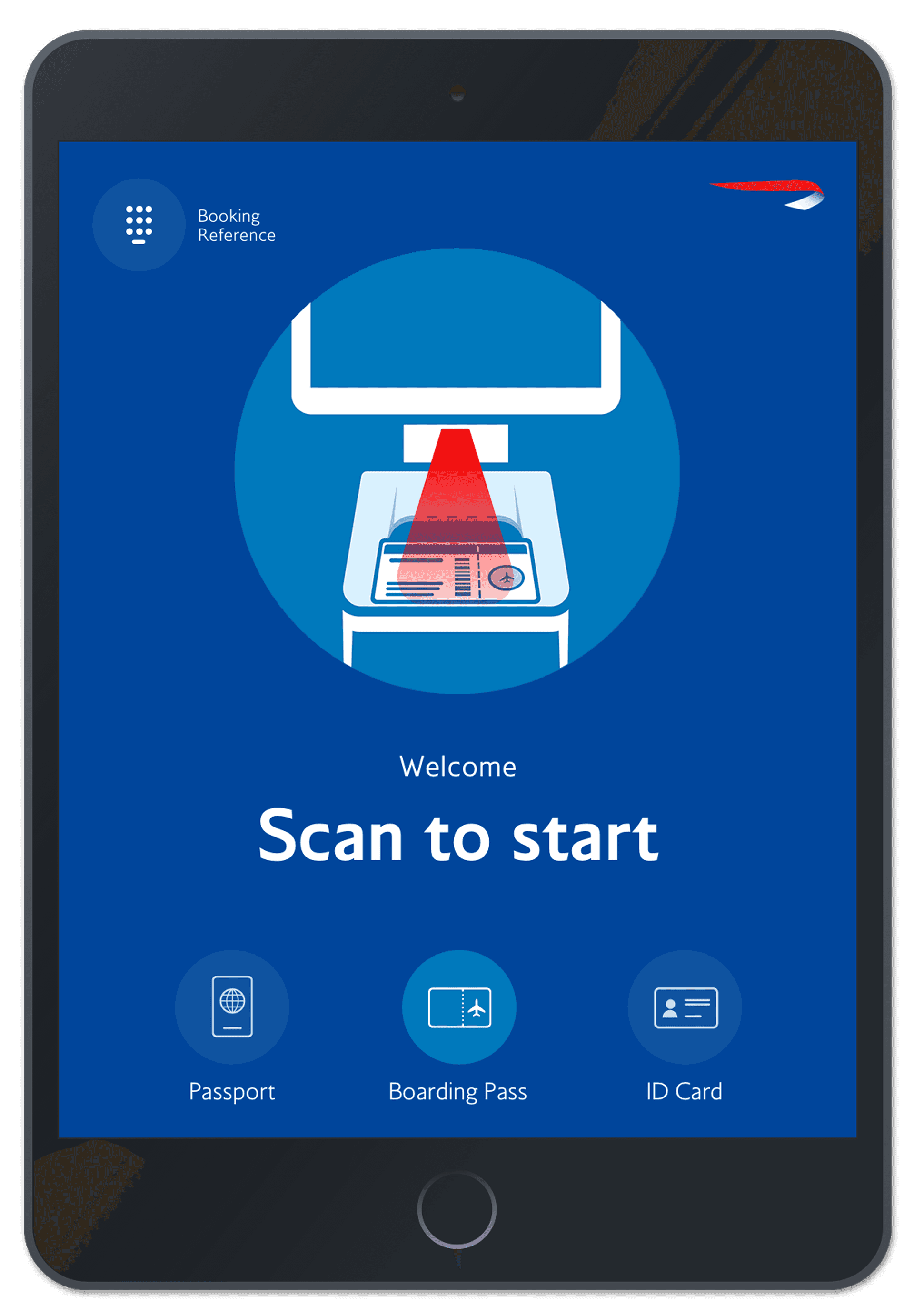
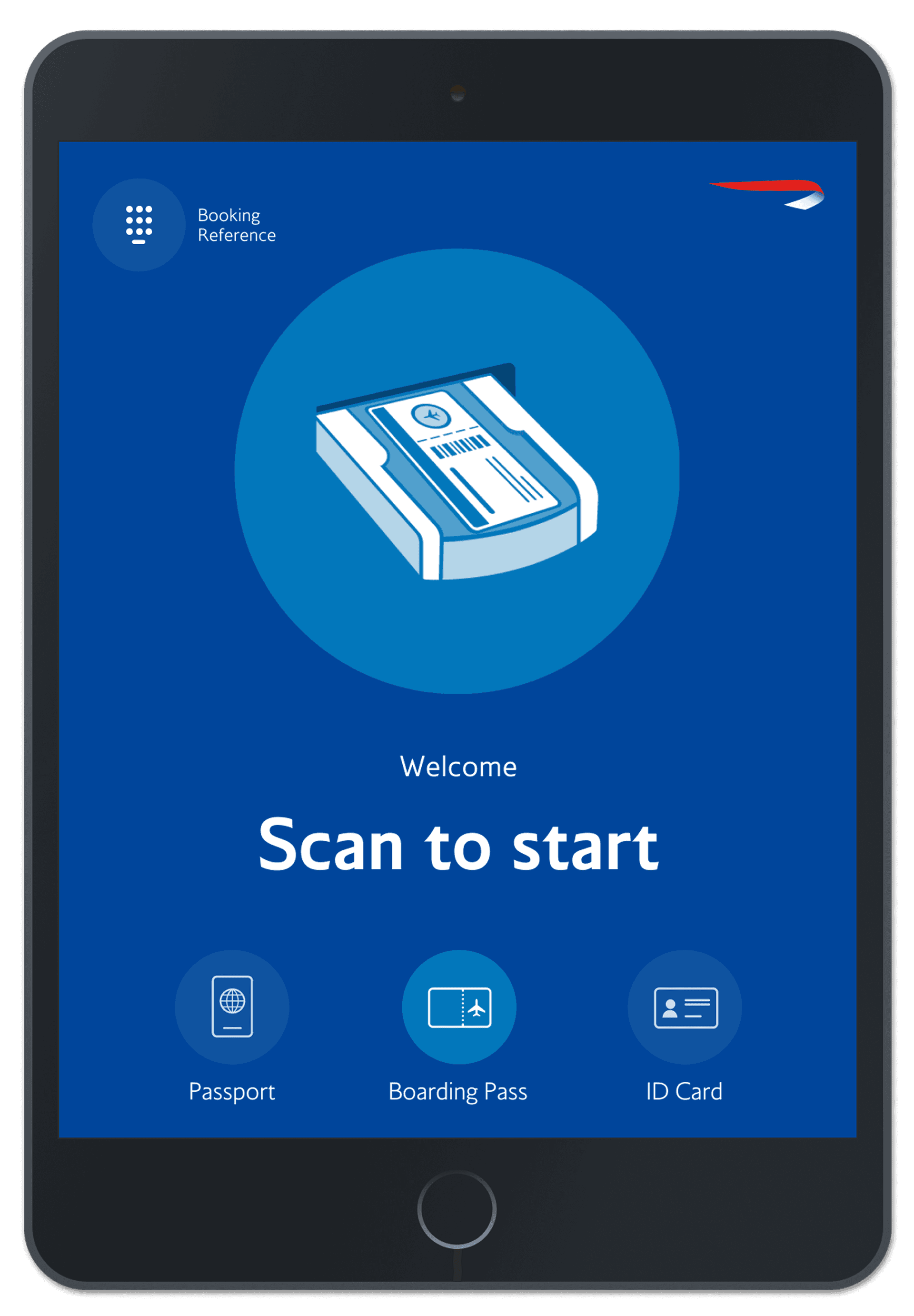
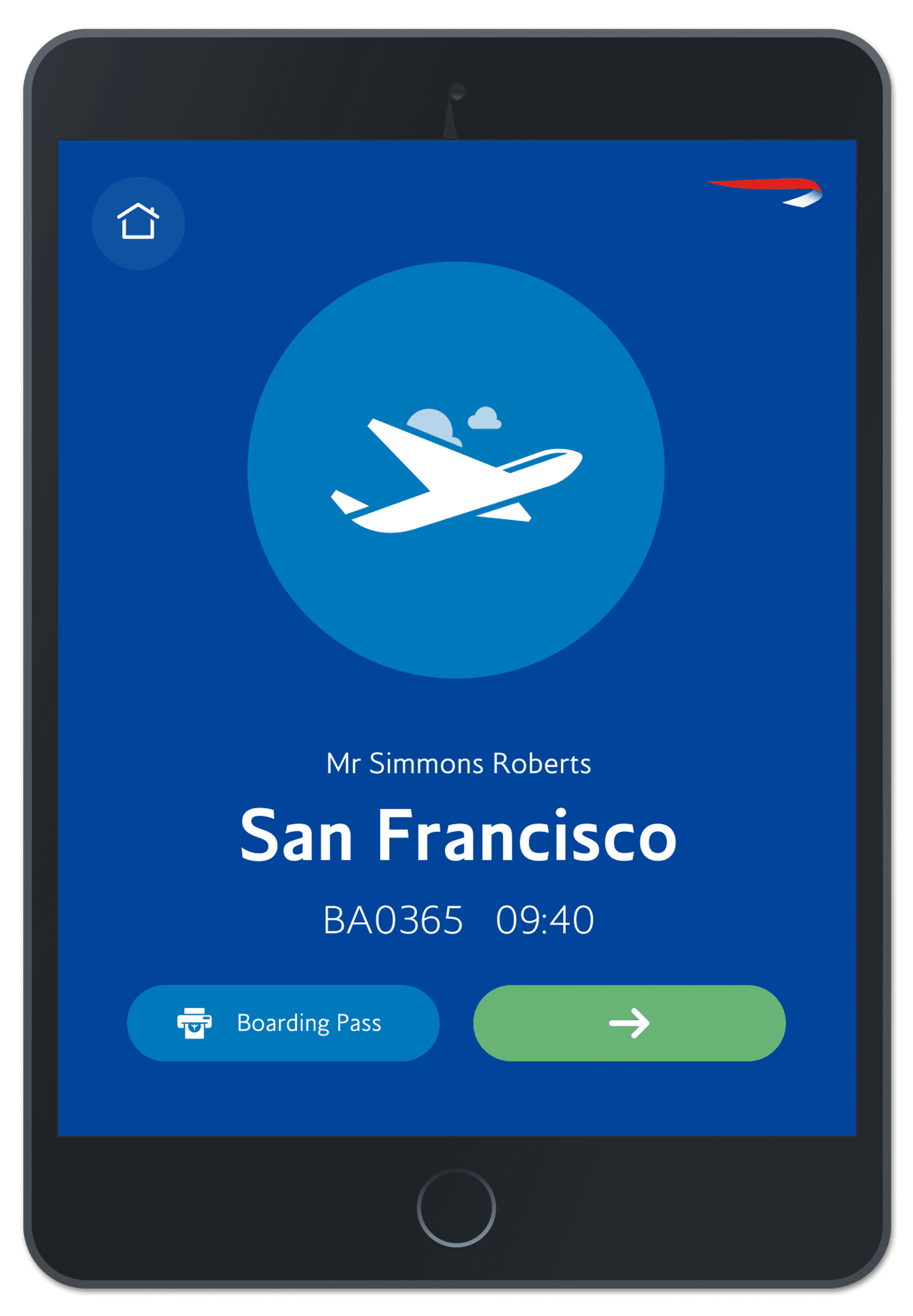
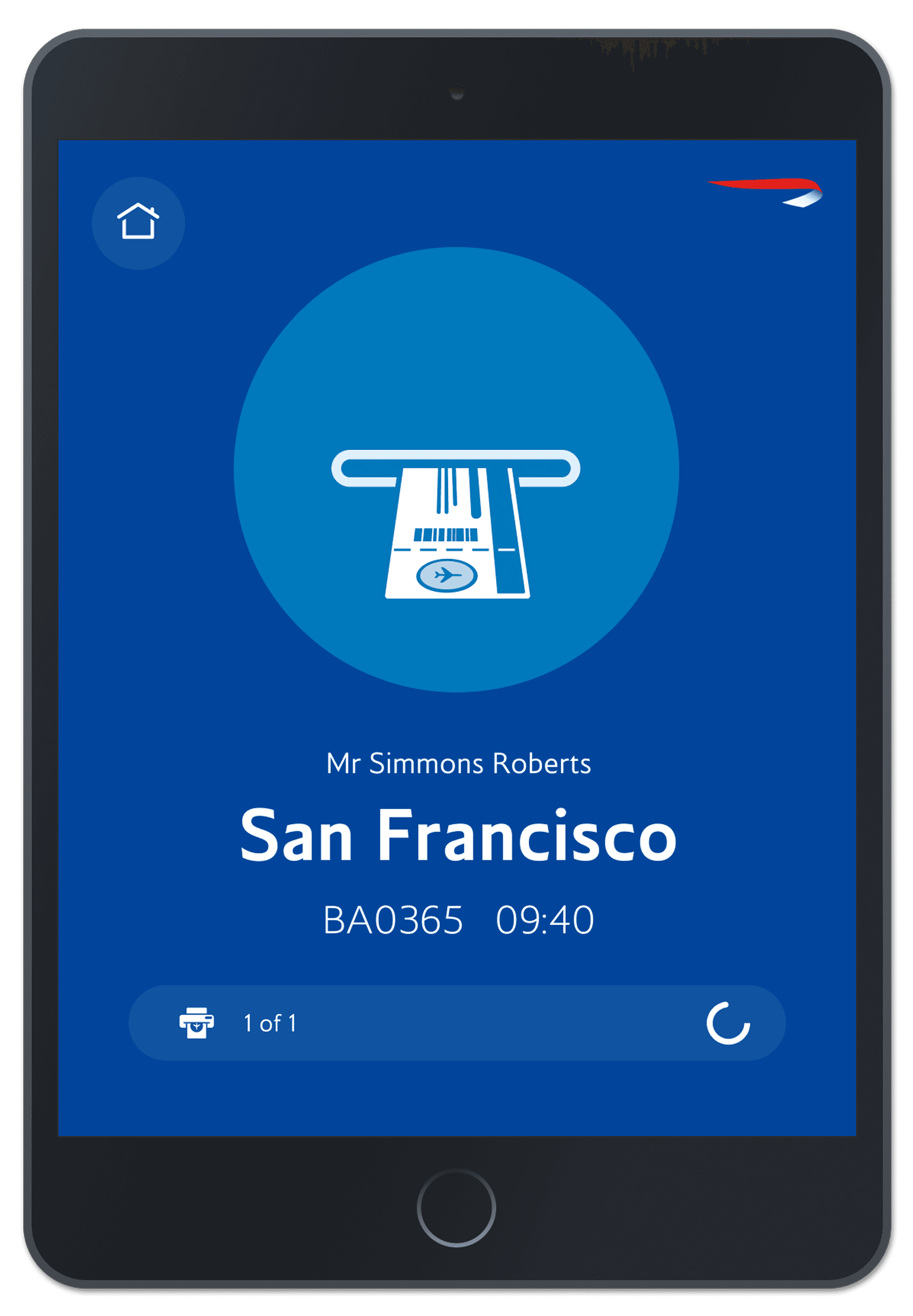
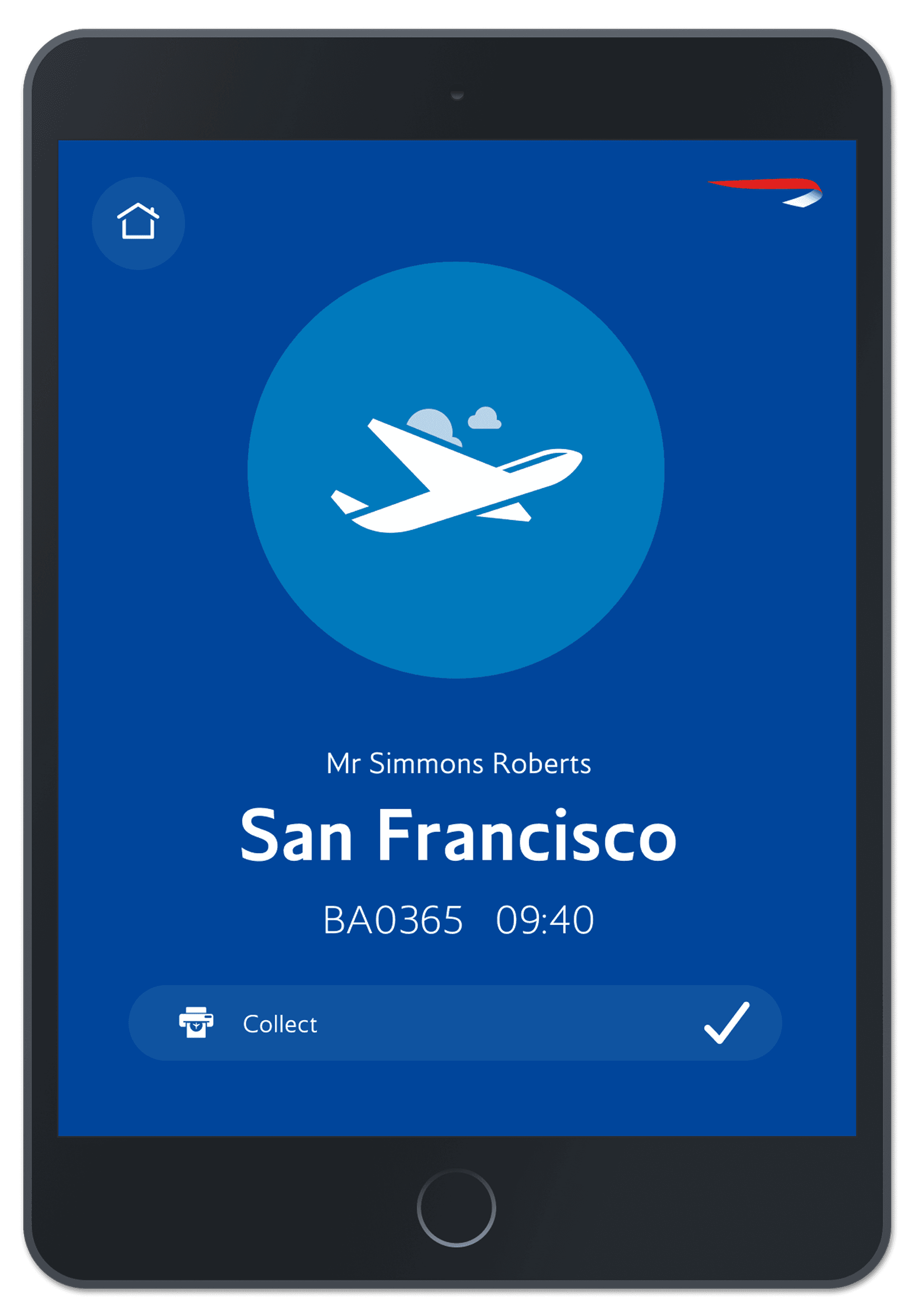
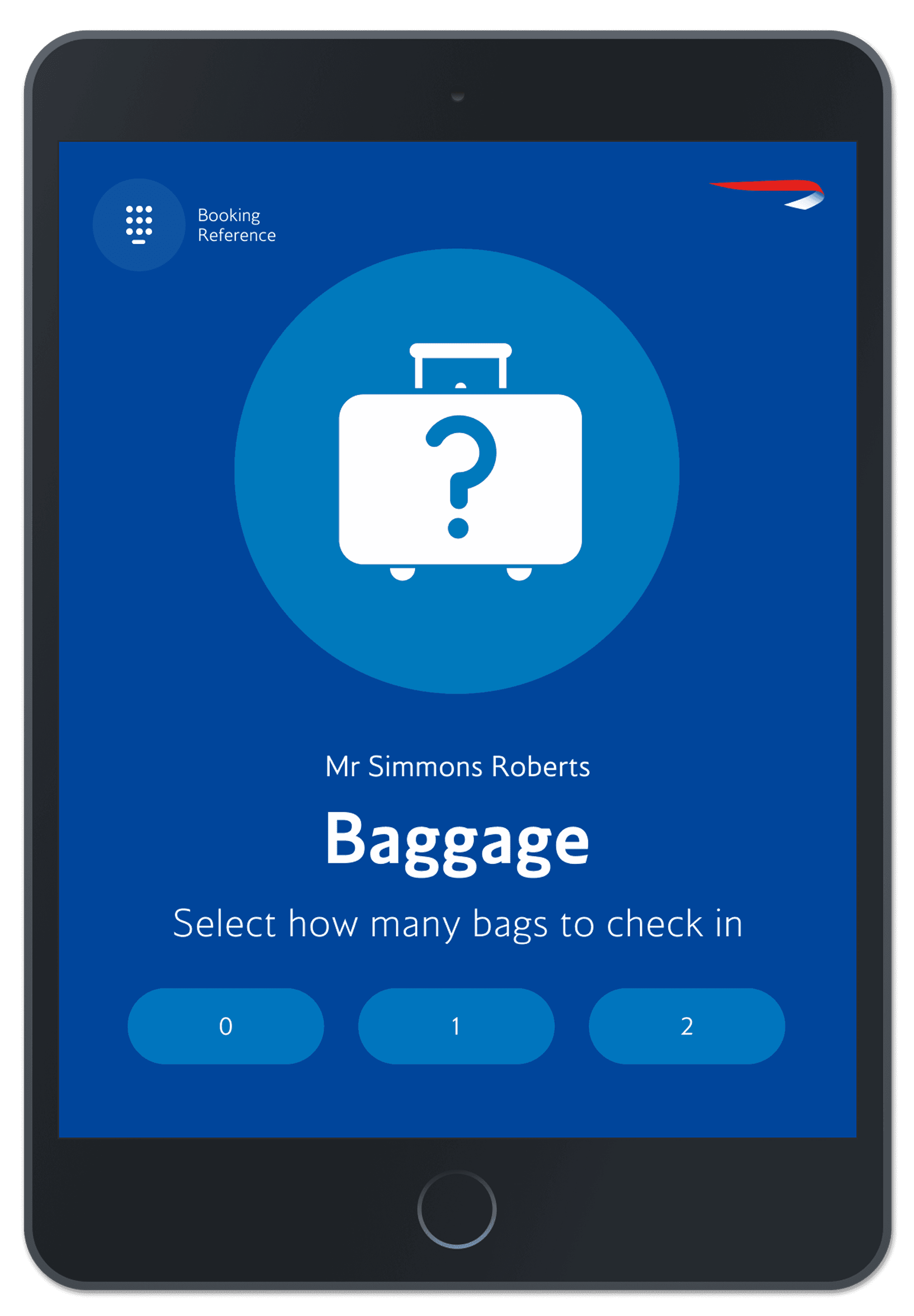
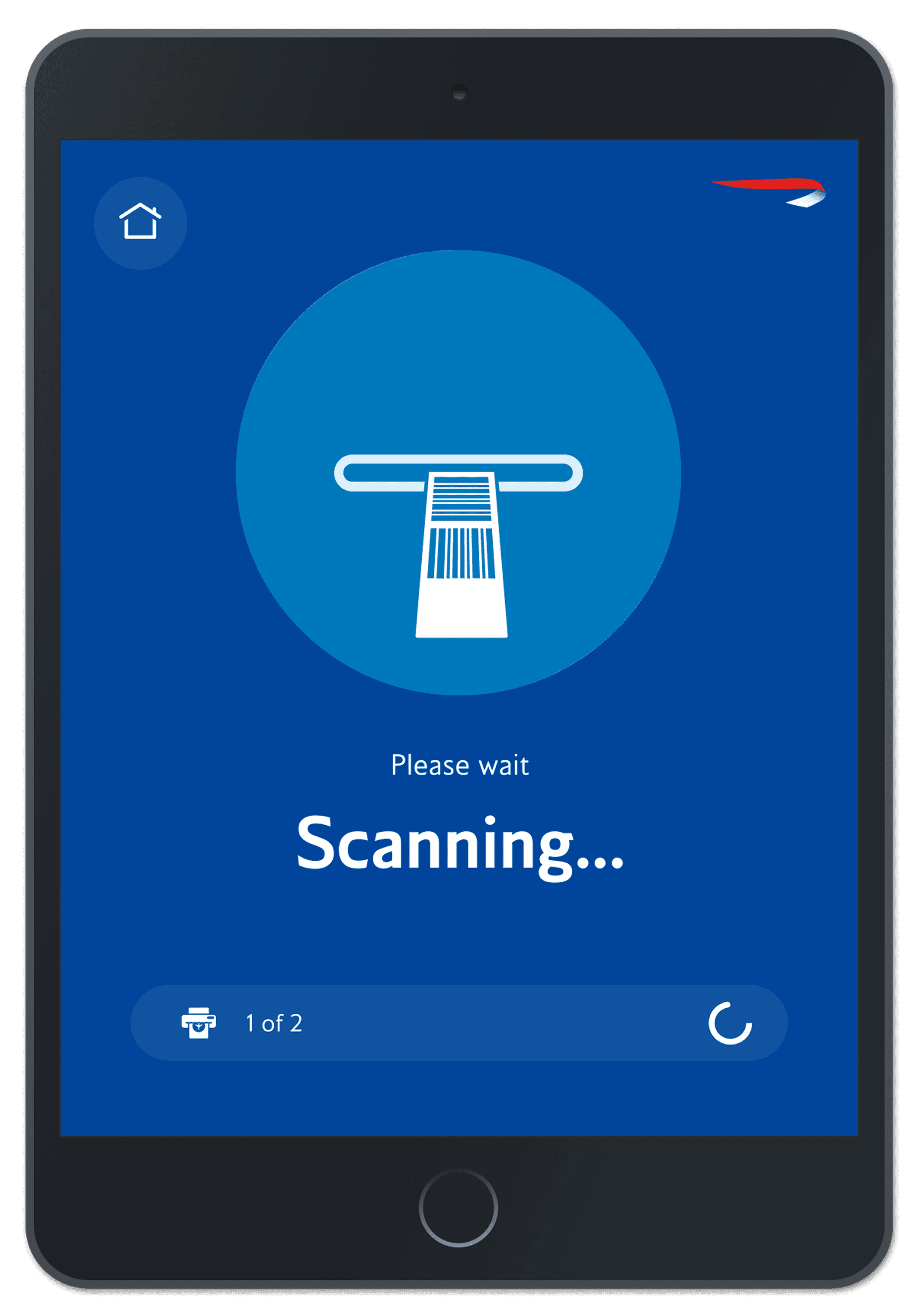
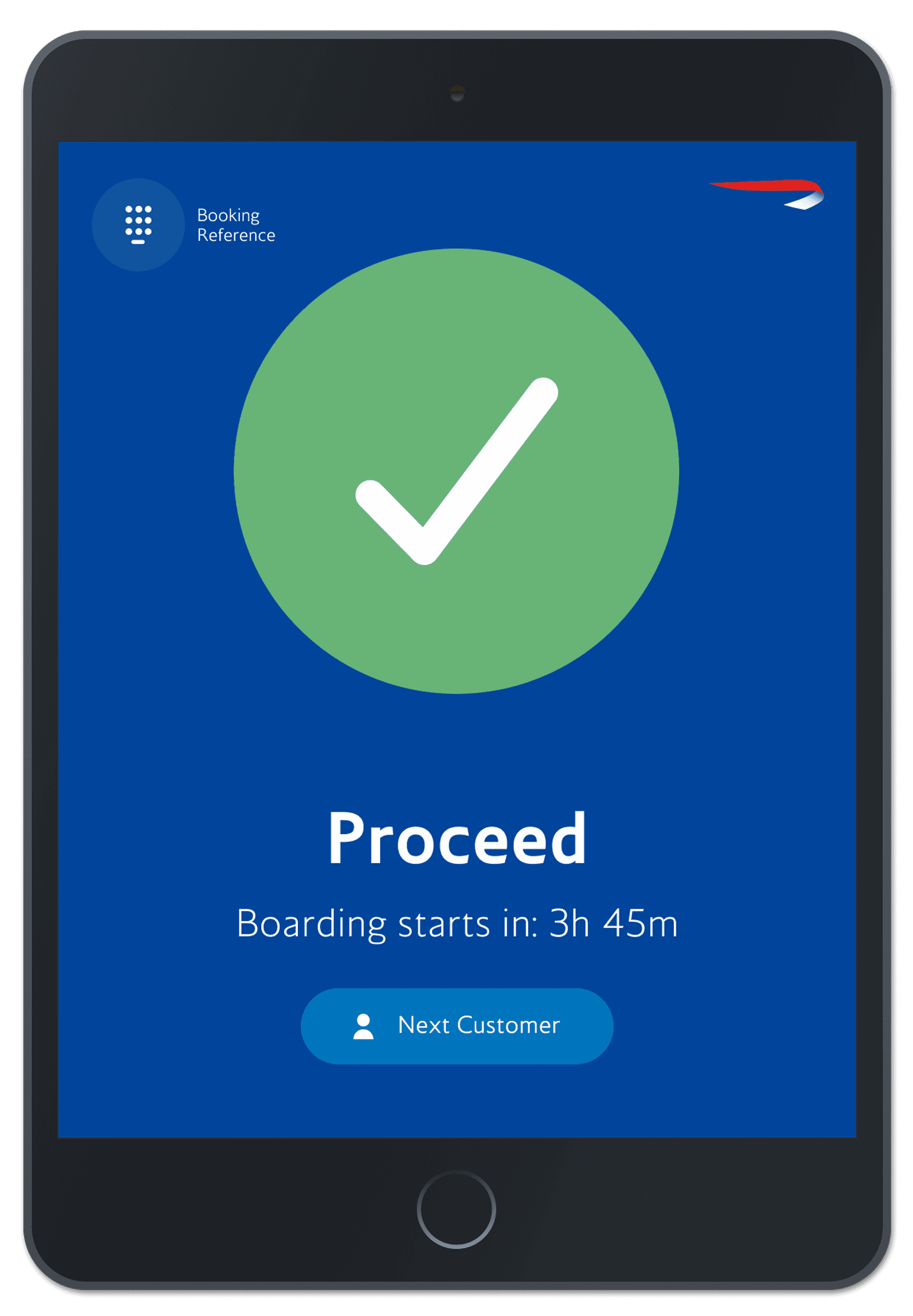
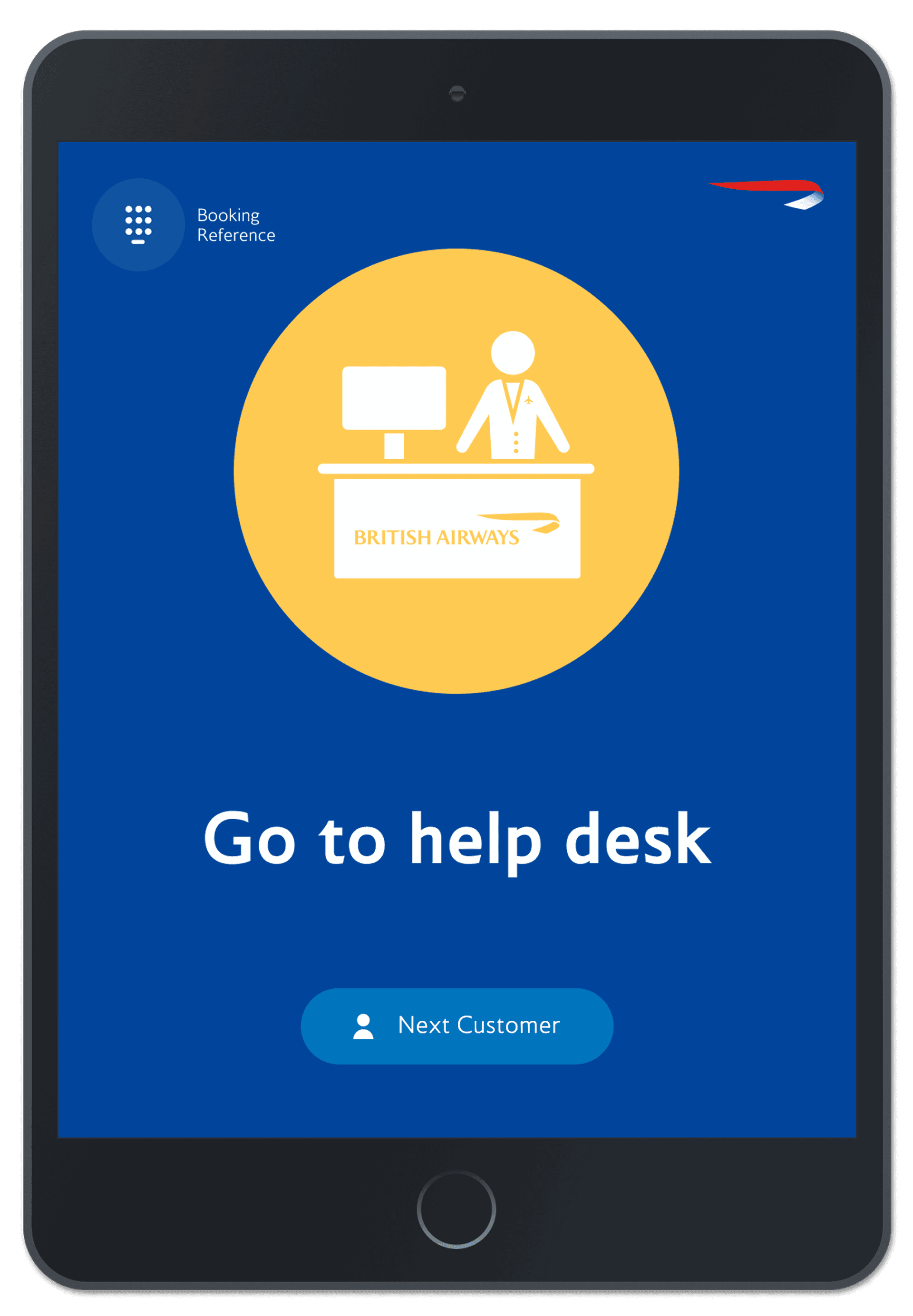
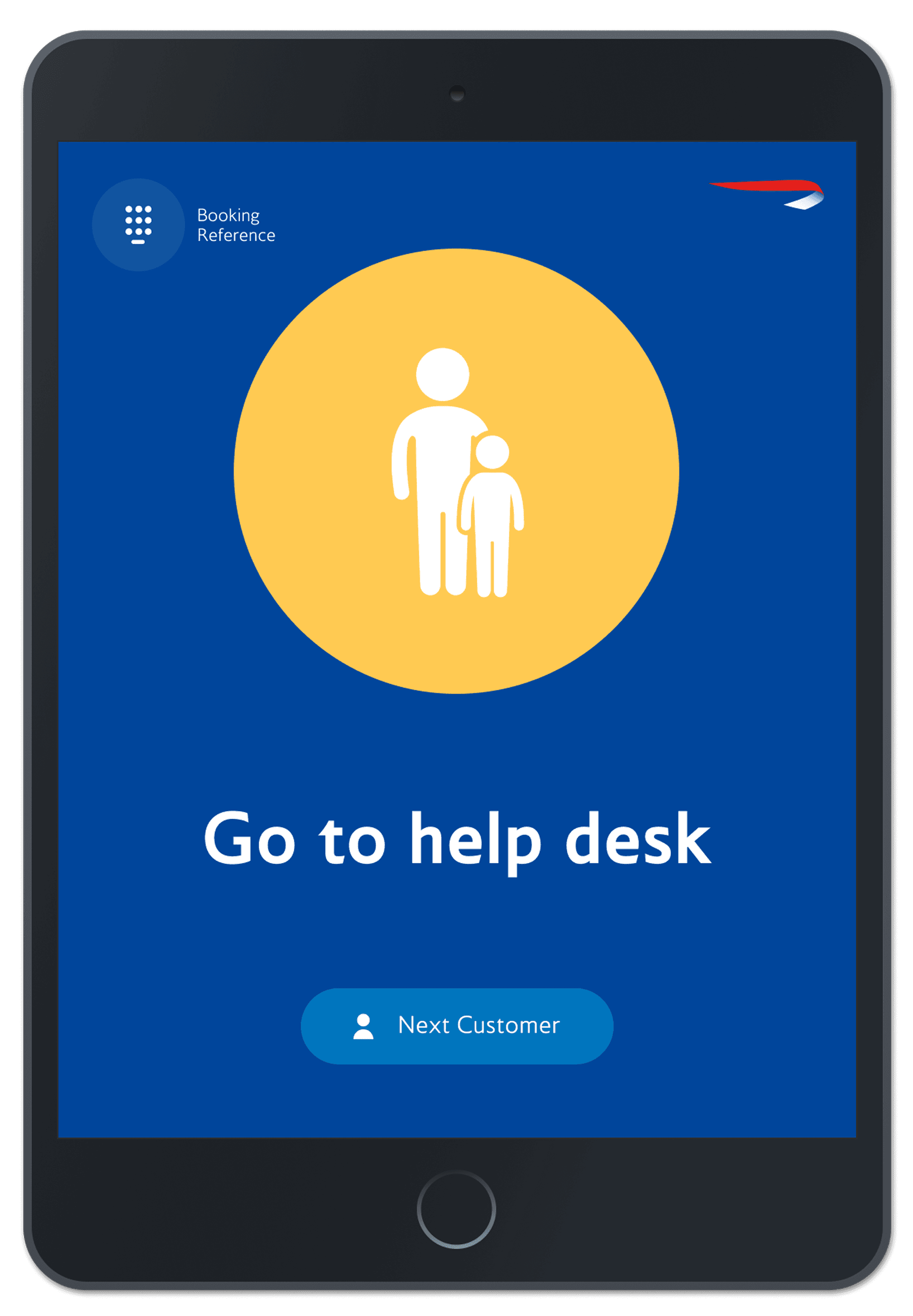
Bold, icon-led interface designed for speed and clarity in a busy airport environment, enabling passengers to complete tasks quickly and intuitively.
The redesigned kiosk solution delivered a faster and more inclusive experience, helping British Airways:
Reduce queue times at service desks.
Improve passenger independence for both domestic and international travellers.
Increase completion rates for self-service tasks such as gate lookup and baggage tag printing.